
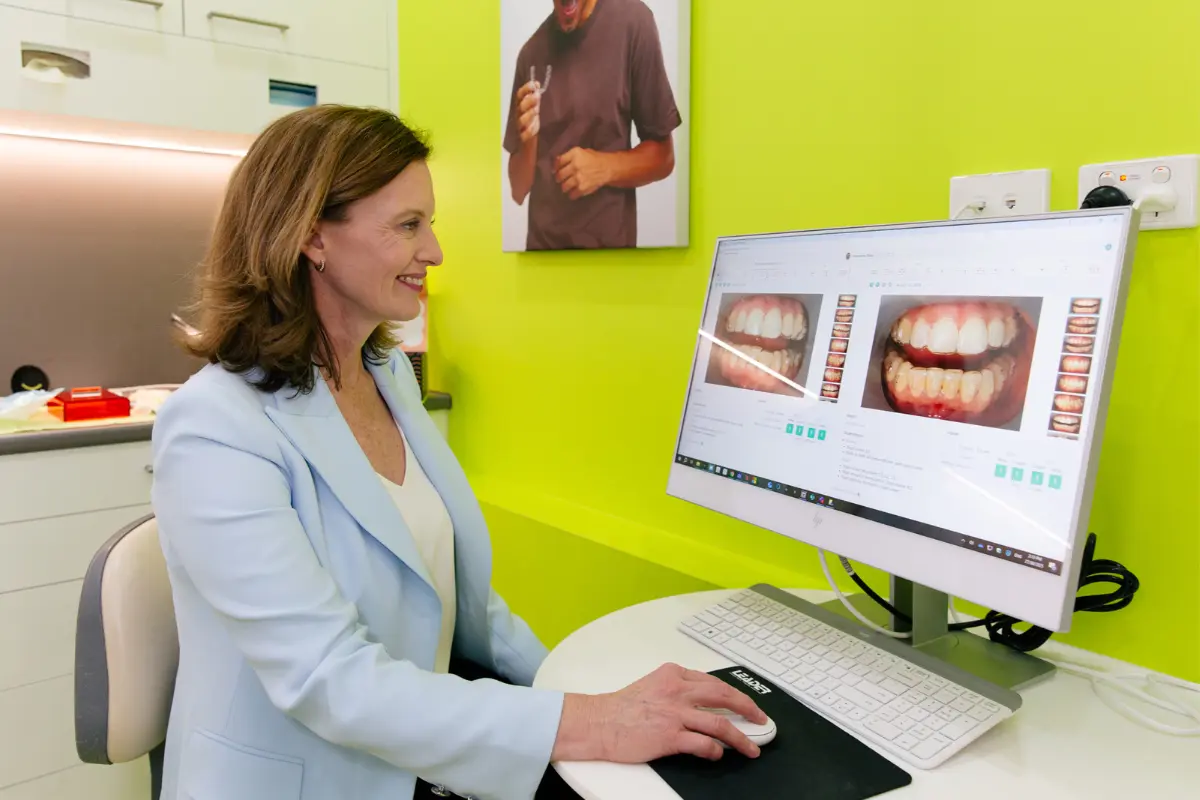
If you’ve ever looked at your treatment plan or spoken with our Specialist Orthodontists and felt unsure about the terminology, you’re not alone. Orthodontics uses precise language to describe how teeth, bites, and jaw relationships work but the good news is, it’s much easier to understand once it’s broken down.
This guide explains commonly used orthodontic terms in a clear, practical way so you can feel more confident about your clear aligner journey and what’s happening at each stage of treatment.
Malocclusion
Malocclusion comes from Latin: “malus” meaning bad, and “occlusion” meaning bite. In simple terms, it refers to how your upper and lower teeth fit together.
When the bite doesn’t align properly, whether due to crowding, spacing, or jaw positioning, this is considered a malocclusion. It’s one of the most common reasons patients seek orthodontic treatment in Melbourne.
The positive news is that modern clear aligner treatment guided by a Specialist Orthodontist can effectively correct many types of malocclusion in a predictable and comfortable way.
Diastema
A diastema is a gap or space between teeth, most commonly seen between the two upper front teeth.
The term originates from Greek and simply means “spacing between teeth.” While some people embrace the look, others may feel self-conscious about gaps in their smile. A diastema can occur for several reasons, including the natural shape, size and position of the teeth, jaw spacing, or the labial frenum, the small piece of gum tissue that connects the upper lip to the gums. If this tissue sits lower or is thicker than usual, it can prevent the front teeth from naturally closing together.
Overbite
Ever looked at your smile in the mirror and said my lower teeth don’t show when I smile? An overbite describes how much the upper front teeth overlap the lower front teeth when you bite down.
A small amount of overlap is completely normal. However, when the overlap is too deep, it is often referred to as a deep bite. This can sometimes lead to uneven tooth wear or jaw discomfort over time.
Orthodontic treatment aims to bring the bite into a healthier, more balanced position while also improving smile aesthetics allowing for your lower teeth to show more clearly.
Overjet
An overjet describes how far the upper front teeth sit in front of the lower front teeth when you bite together. A small overjet is completely normal, but when the upper teeth protrude too far forward, it’s often referred to as an increased overjet.
An increased overjet can happen due to jaw growth, tooth positioning, thumb sucking habits during childhood or bite imbalances. In some cases, it may make the front teeth more prone to damage or affect how the bite functions.
Orthodontic treatment such as braces or clear aligners can help improve overjet by bringing the teeth and bite into a healthier, more balanced position.
Interproximal Reduction (IPR)
Interproximal reduction, or IPR, is a simple and carefully controlled way of creating a small amount of extra space between certain teeth.
It involves gently polishing a very thin layer from the sides of the teeth — usually less than a fraction of a millimetre. This helps teeth move more easily into the right position during clear aligner treatment, especially when things feel a bit crowded.
The process is precisely planned by your Specialist Orthodontist if it’s required in your treatment plan and only done where it’s needed as part of your personalised treatment plan. Most people find it quick, comfortable, and easier than they expected.
Our Specialist Orthodontists will determine if IPR is clinically required as part of your treatment plan. If required, IPR is included at no extra cost.
Refinement Aligners
Refinement aligners are an additional set of aligners that may be recommended after your initial treatment phase.
Think of them as the adjustment stage. Once your teeth have moved closer to their planned positions, refinement aligners can be used to make additional tooth movements and address any remaining alignment or bite adjustments before you finish treatment.
Occlusal Surface
The occlusal surface is the chewing/biting surface of your back teeth, the part you use when you bite and grind food.
This surface is essential in orthodontics because it helps determine how your bite functions overall. A well-aligned occlusal surface contributes to efficient chewing, even tooth wear, and long-term oral health.
Why These Terms Matter In Your Treatment Journey
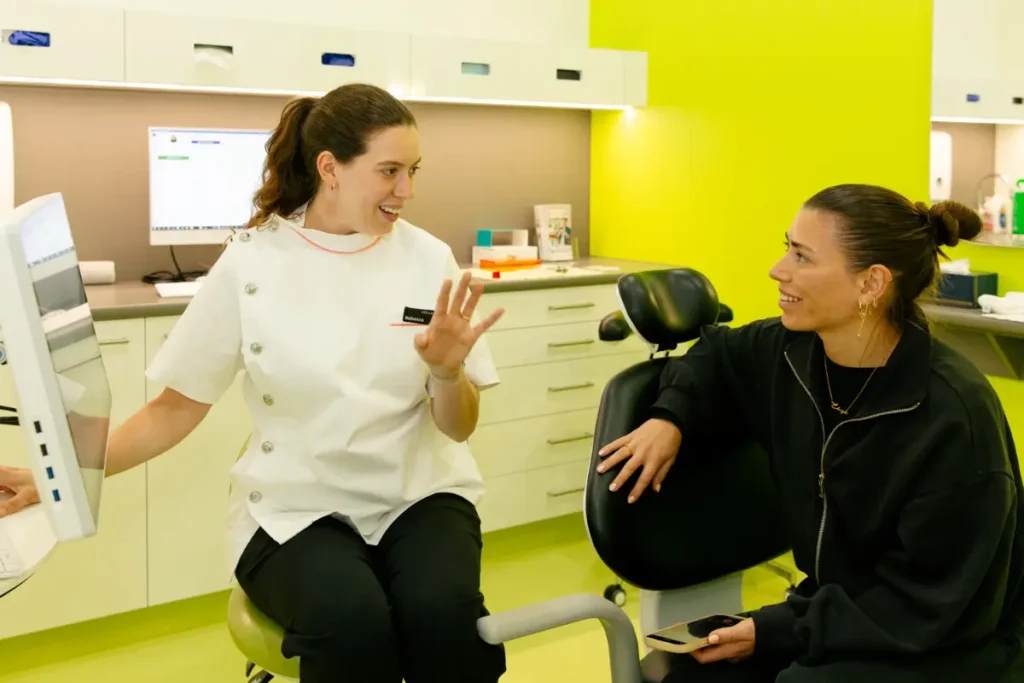
Understanding these terms can make your orthodontic journey feel less technical and more transparent. When you know what our Oral Health Therapists and Specialist Orthodontists, Dr Igor Lavrin and Dr Sarah Lawrence, are referring to, it becomes easier to follow your progress and feel confident in your treatment decisions.
Whether you’re exploring clear aligners for crowding, spacing, or bite correction, each term represents a step toward a healthier, more balanced smile.
Explore Your Smile Options With Confidence
If you’re considering clear aligner treatment in Melbourne and want to better understand what’s possible for your smile, our friendly and professional team is here to guide you through every step.
Book a free consultation at one of our clear aligner specialist clinics in Brunswick, Hawthorn or Waurn Ponds to discuss your smile goals and receive a personalised treatment plan tailored to your needs.
Consultation required to assess suitability. Our orthodontists will advise if this treatment is right for you.