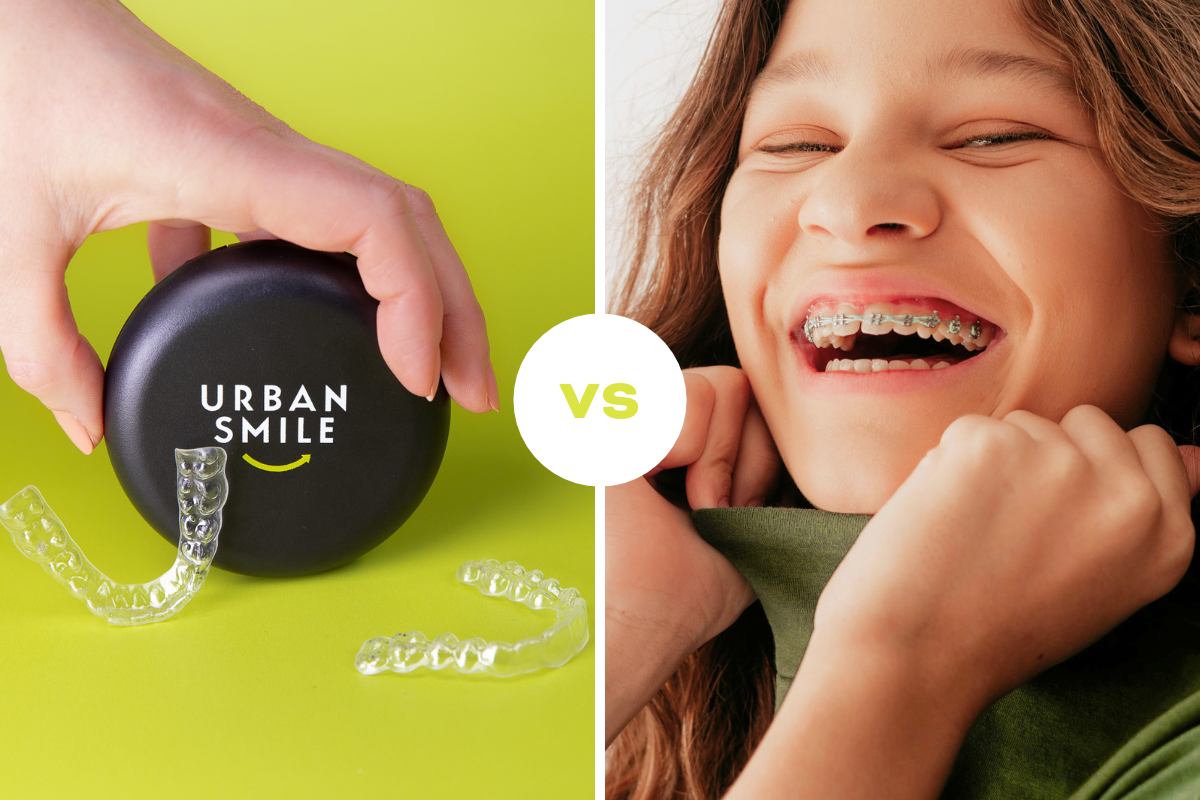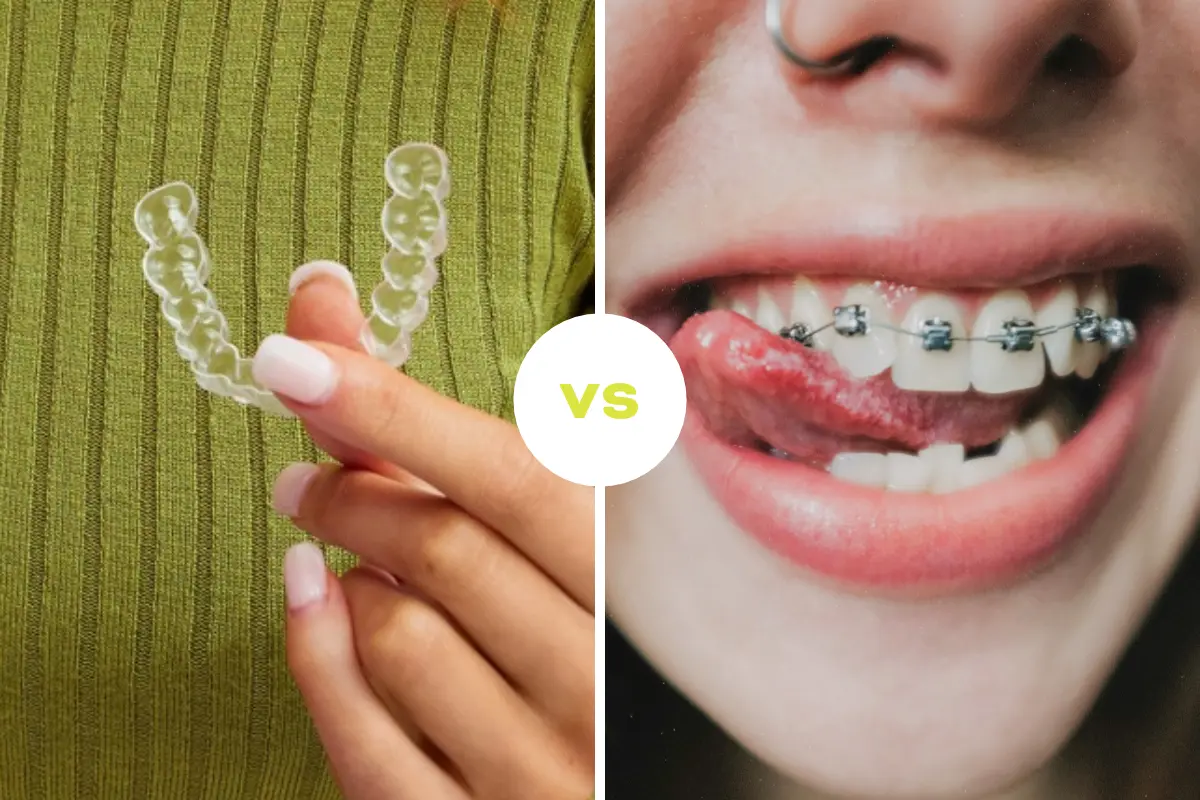
So, you’ve decided to straighten your teeth. But there’s one question you might still be wondering: can clear aligners treat your particular orthodontic problem, or will you need braces?
In Part 1, we explored how clear aligners and braces work. In Part 2, we compared the practical considerations when choosing treatment.
Now, let’s get specific.
From crowded teeth to overbites and crossbites, here’s how different orthodontic concerns can influence which treatment is recommended.
The Short Answer
Both clear aligners and braces can treat a wide range of orthodontic concerns, including crowding, gaps, overbites and crossbites. However, some more complex cases may be better suited to braces or additional orthodontic treatment. The right option depends on your individual bite problem, its severity and the tooth movements required.
Can Clear Aligners Treat Crowded Teeth?
Clear aligners and braces can both treat crowded teeth, depending on the severity of the crowding and the movements required.
Crowding happens when there isn’t enough room for your teeth to sit in their ideal positions. You might notice overlapping, twisted or crooked teeth.
Clear aligners are often suitable for mild, moderate and some severe crowding cases. They work by gradually guiding teeth into alignment.
Some severe crowding, particularly when significant tooth rotations, extractions or complex movements are involved, may require braces or a different treatment approach.
Read more: Crowded Teeth? How Clear Aligners Can Help
Clear Aligners vs Braces for Overbite and Overjet
First, a quick distinction. An overbite refers to how much your upper front teeth vertically overlap your lower teeth, while overjet describes how far your upper teeth sit in front of your lower teeth.
Although they’re often confused, they can require different approaches to treatment.
Clear aligners can treat many overbite and overjet cases, sometimes with the help of orthodontic elastics to guide the bite.
However, when the problem involves significant differences in jaw position or more complex tooth movements, braces or additional orthodontic treatment may be recommended.
The important thing isn’t just how straight your front teeth look. It’s how your upper and lower teeth fit together.
Read more: Can Clear Aligners Treat an Overbite?
What About Crossbites?
A crossbite occurs when one or more upper teeth sit inside the lower teeth when you bite together, rather than outside them.
Can clear aligners fix a crossbite? In some cases, yes!
When a crossbite is caused mainly by tooth positioning, clear aligners may be able to move the affected teeth into a more appropriate position.
However, crossbites involving significant differences in jaw width or jaw development may require other orthodontic appliances, sometimes alongside braces.
Your Specialist Orthodontist will assess whether the crossbite is dental (related to tooth position), skeletal (related to jaw structure), or a combination of both.
Can Clear Aligners Fix an Open Bite?
Have you noticed that your upper and lower front teeth don’t touch when you bite down?
This is known as an open bite.
Open bites can develop for several reasons, including tooth positioning, jaw growth patterns and habits such as prolonged thumb sucking or tongue thrusting.
Clear aligners can be an option for certain open bites, particularly those that can be addressed through planned tooth movements.
More complex open bites involving the jaw structure may require braces, additional appliances or, in some cases, surgical assessment.
Because open bites can have different underlying causes, identifying what’s contributing to the problem is an important part of treatment planning.
Clear Aligners vs Braces for Gaps Between Teeth
If you’ve noticed spaces between your teeth, you might be wondering whether clear aligners can close them.
For many patients, the answer is yes.
Both clear aligners and braces can move teeth closer together to address spacing. Clear aligners may be suitable for straightforward gaps, including some cases of diastema (a gap between the front teeth).
However, the cause of the spacing matters. Gaps associated with missing teeth, tooth-size differences or other dental concerns may need additional treatment.
Your orthodontist will also consider how the teeth will be maintained in their new positions after treatment, as some gaps have a greater tendency to reopen.
Read more: How to Fix a Gap Between Your Teeth
What if You Have More Than One Bite Problem?
Here’s something worth knowing: orthodontic concerns rarely exist in isolation.
You might have crowded lower teeth, an increased overbite and a crossbite all at once.
This is where treatment planning becomes particularly important.
Your orthodontist needs to consider how moving one group of teeth will affect the others, rather than treating each issue separately.
For some patients, clear aligners can address several concerns within one treatment plan. For others, the combination of movements required may make braces or another approach more appropriate.
It’s not simply about how many problems you have, but how complex they are to treat.
So, Which Is Better for Your Teeth: Clear Aligners or Braces?
There’s no universal winner.
Clear aligners can address a wide range of orthodontic concerns, from crowding and spacing to certain overbites, crossbites and open bites.
Braces may be more appropriate for cases requiring particular complex tooth movements or additional control.
The right choice depends on your teeth, bite, jaw structure and individual treatment needs.
At Urban Smile, we focus exclusively on clear aligners. Every treatment plan is designed by one of our Melbourne-based Specialist Orthodontists, Dr Igor Lavrin or Dr Sarah Lawrence.
And if clear aligners aren’t suitable for your case? We’ll explain why, so you can understand your options.
Find Out if Clear Aligners Are Right for Your Bite
Not sure what type of bite problem you have? That’s exactly what a consultation can help you understand.
At Urban Smile, your free clear aligner consultation includes digital photos, X-rays, a 3D scan and an oral health assessment. Your records are then reviewed by a Specialist Orthodontist to determine whether clear aligners may be suitable.
Visit us at our Hawthorn, Brunswick or Waurn Ponds studios in Melbourne and Geelong.
Book your free clear aligner consultation to explore your treatment options.
Consultation required to assess suitability for clear aligner treatment. Treatment recommendations and outcomes vary depending on individual orthodontic needs.